
Understanding the pH Levels of Everyday Cleaning Products
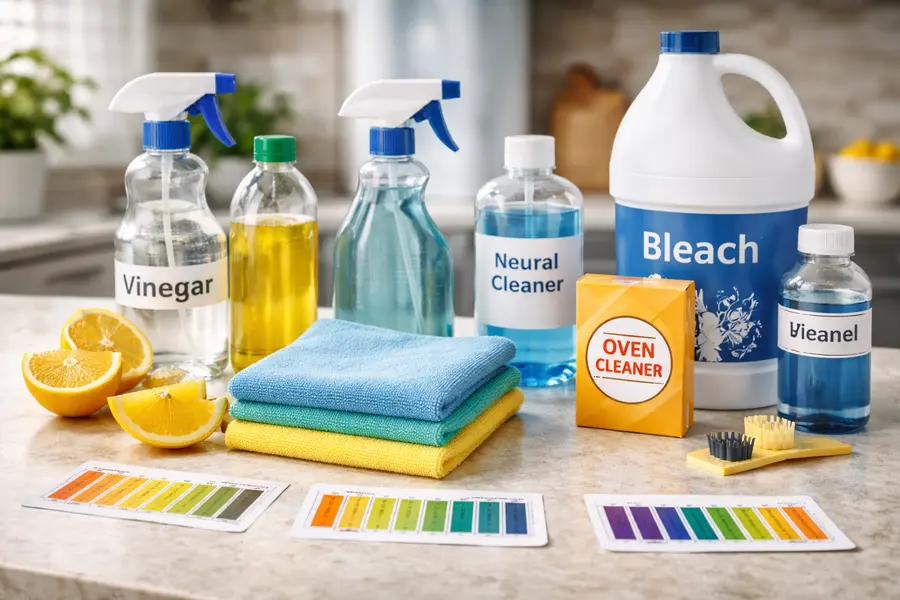
Have you ever wondered if some cleaning products are more potent than others, or if some sprays dry your hands when others make it near soft? It may be as basic as the pH level which is a determination of how acidic or alkaline a substance is and is a significant determinant of efficacy and safety in cleaning. By being aware of the pH of cleaning supplies, one can get the right product to do the right job and your surfaces will be safe, besides the harmful exposure to chemicals will be reduced.
The performance of a cleaning agent is normally furnished by the acidic, neutral or alkaline nature, and the performance of the cleaning agent in shining the glass or greasy countertops. We will discuss the average PH of the common cleaning products and the importance of it in your house.
1. Acidic Cleaners (pH 0–6)
The acidic cleaners are ones whose PH is less than 7 and are particularly useful in regard to the mineral deposits, according to cleaning professionals. They dissolve the alkalinity of these compounds, like calcium, lime and rust and thus they have da eposition contribution. Such everyday acid products as vinegar, 2-3 pH, are known to wield miracles on water spots and soap scum. The lemon juice which is approximately pH 2-3 is natural and works well on kitchen stains and on eliminating odours.
This is the case with many bathroom cleaners the pH levels of which range between 3-4 and are specifically designed to clean tabs, toilets and tiles. Acidic cleaners, although quite efficient, should be cautiously used. Gloves are advisable and also must not be combined with bleach or ammonia, which will form dangerous fumes.
2. Neutral Cleaners (pH 6–8)
The neutral types of cleaners are similar to the neutral pH, which is near 7, therefore are delicate on most surfaces. These are the products that can be used in the daily cleaning activity since they are safe, non-corrosive, and efficient without the use of harsh chemicals. Examples are dish soap, which is pH 7 and which is mild to the hands and also removes grease with warm water. It is the most typical type of all-purpose cleaners that do not cause any damage to the painted surfaces, wood, and laminate.
There are also glass cleaners that are neutral and they do not streak on the cleaning process of removing the smudges and fingerprint. Generic servicemen are ideal for general maintenance. They minimise chemical exposure, limit the amount of damage done to the surface, and can be used in homes where children or pets are present.
3. Alkaline Cleaners (pH 8–14)
Bases with a pH of above 7 are called alkaline cleaners and are used in removing grease, oils, and organic stains. Their PH is also high and as a result, they are very effective in breaking down fats and proteins and thus they cannot be done without in the kitchen and heavy-duty cleaning. Baking soda (sodium bicarbonate) is a mild alkaline acid with a pH of 8-9, which is good to use to clean, deodorize and remove stains. About pH 11, ammonia comes in handy with tiles, glass and hard grease.
On the other end of the spectrum, the oven cleaners may extend to pH 13-14, which is strong enough to eliminate baked food and dirt. Alkaline cleaners are quite effective but care should be taken when using them. Protective gloves and ventilation are necessary and they must never be used mixed with acidic products owing to the harmful chemical reaction.
4. Why pH Matters in Cleaning?
Knowing the pH of your cleaning products is not merely a scientific thing to know but it has practical advantages. This is because acidic cleaners can destroy other surfaces, such as natural stone and are ideal when it comes to addressing the accumulation of minerals. Neutral cleaners are not harmful when regular cleaning is involved but can have problems with grease. Alkaline cleaners are most effective in dissolving oils and organic substances and they should be carefully treated, which is important for tasks like end of lease cleaning gold coast, where the right products ensure safe and thorough results.
The cleaner should be matched with the surface and the type of stain to be cleaned to achieve maximum efficiency and safety. As an example, an acidic cleaner is far less effective at cleaning an oven or a greasy pan than an alkaline one, and cleaners with high pH can do away with the finish on wood furniture. Making you know that pH will leave you cleaner, faster and without hurting anybody.
5. Safety Considerations
PH is also an indicator of how clean a product is, Stokesies also reminds you to watch it. High acidic and alkaline products could be irritating to the skin, eyes and respiratory system. The general rules of safety also should be observed: it is necessary to wear gloves and, in case of necessity, a mask; it should be well-ventilated when using strong expert cleaning agents, it is essential not to mix acidic and alkaline solutions together and ensure that all cleaning material is locked away so that children and pets could not reach them. This is particularly important when you attempt to clean tricky household objects, where the wrong product or pH level could damage delicate surfaces or finishes.
Conclusion
The next time you touch a cleaning bottle you will remember the following: What is the PH of this cleaning bottle, and what will be the next object into contact with the cleaning bottle? Probably, the data on average pH of cleaning supplies will help you to clean the items, shield your surfaces as well as make certain that it is not deadly. Acidic solutions, including vinegar, are preferable in cleaning mineral deposits, neutral cleaners, such as vinega,r, are preferable in the routine care, and alkaline cleaners are incomparable in cleaning grease and hard to remove stains.
Related Posts
Common Bathroom Cleaning Problems and How to Fix Them
Bathrooms, more than any other room in the house, are frequently used and because of…
Which Method Is Best for Cleaning Your Home Drains?
Which Method Is Best for Cleaning Your Home’s Drains? Have you not been standing at…
Tips and Tricks to Clean Laminate Floors
Do your laminate floors no longer shine and you find they are becoming dull after…